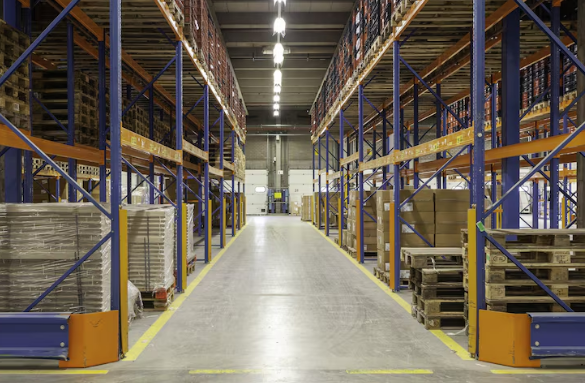
Racking is one of those decisions that feels straightforward until you actually start comparing options, and then you realize how much it affects everything else in the facility. Storage density, pick efficiency, and even how well automation performs later all trace back to racking choices made early in a project. Choosing the right pallet racking systems for the specific volume and SKU mix of a warehouse is actually handling matters more than most operators expect going in.
High-volume warehouses don’t have the luxury of a generic racking layout. The wrong choice doesn’t just waste space, it creates bottlenecks in picking, replenishment, and flow that compound as volume grows. What looks like a minor inefficiency at moderate volume becomes a real operational drag once throughput climbs.
Selective Racking Isn’t Always the Right Default
Selective racking is the most common type for a reason. It gives direct access to every pallet, which makes it flexible and easy to work with. But that flexibility comes at the cost of storage density, since selective racking dedicates a lot of aisle space to give every pallet position direct forklift access.
For high-volume operations with a lot of SKU variety, that tradeoff often makes sense. For operations with fewer SKUs and higher volume per SKU, selective racking can waste a significant amount of usable storage space that denser configurations would recover.
The mistake a lot of facilities make is defaulting to selective racking because it’s familiar, without actually running the numbers on whether a denser system would serve the operation better.
That analysis doesn’t need to be complicated. Comparing storage cube utilization between selective and a denser alternative, based on actual SKU count and pallet turnover, usually makes the right answer fairly clear. The issue is that step often gets skipped in favor of just going with what’s familiar from previous projects.
High-Density Racking Trades Access for Storage Capacity
Drive-in, push-back, and pallet flow racking all sacrifice some direct access in exchange for significantly more storage density. These systems work well when SKU variety is lower and pallets of the same product can be stored together in depth, rather than needing individual access to every position.
The tradeoff is picking flexibility. High-density systems generally follow last-in-first-out or first-in-first-out patterns depending on the type, which works fine for some operations and creates real problems for others, particularly if inventory rotation requirements don’t match how the racking actually accesses product.
Getting this wrong means a facility with racking that technically holds more product but creates operational friction every time inventory needs to be pulled in an order the racking wasn’t designed to support.
Racking Choice Directly Affects How Well Automation Performs Later
Facilities planning any level of automation need to think about racking compatibility from the start, not as an afterthought once automation gets added. ASRS systems, robotics, and conveyor integration all have specific requirements around racking configuration, aisle width, and beam spacing that aren’t always compatible with racking chosen purely for manual operation.
Retrofitting racking to accommodate automation after the fact is expensive and disruptive, often requiring a full racking replacement rather than a modification. Facilities that consider warehouse automation plans, even future ones, during the initial racking decision avoid a lot of this rework down the line.
This matters even for facilities that aren’t automating immediately. Racking chosen with automation compatibility in mind, even if automation is years away, keeps that option open without requiring a disruptive replacement when the time actually comes.
Load Capacity Needs to Match Real-World Conditions, Not Just Averages
Racking load ratings are calculated based on specific assumptions about weight distribution and handling conditions. A rating that looks adequate on paper can fall short if actual pallet weights vary more than expected, or if forklift operators aren’t handling loads exactly as the system was designed to accommodate.
This is where a lot of facilities underestimate risk. Choosing racking rated for average pallet weight, without accounting for the heavier end of what actually gets stored, creates a system that’s technically overloaded during normal operation, even if nobody notices until an inspection or an incident forces the issue.
Being honest about the full range of what’s actually being stored, not just the average case, is what keeps load capacity decisions realistic instead of optimistic.
This is also where periodic reassessment matters. Product lines change, packaging changes, and pallet weights can shift over the life of a facility in ways that quietly outpace the assumptions a racking system was originally designed around. A load capacity that was accurate at installation isn’t guaranteed to stay accurate years later without someone checking.
Aisle Width Is a Bigger Decision Than It Looks
Aisle width determines both storage density and what kind of material handling equipment can operate in the facility. Narrower aisles increase storage capacity but require specialized narrow-aisle forklifts, which come with their own cost and operational considerations.
Facilities sometimes choose aisle width based on current equipment without considering whether future automation or different material handling approaches might require a different configuration. That decision gets locked in structurally once racking is installed, which makes it one of the more consequential choices in the whole planning process.
Revisiting aisle width after the fact almost always means reconfiguring or replacing racking, which is a far more expensive path than getting the width right during initial planning. It’s worth spending real time on this decision rather than defaulting to whatever width the current fleet of forklifts happens to need.
If you’re evaluating racking options for a high-volume operation and want to make sure the choice actually fits your SKU mix, volume, and future plans, it’s worth working through those specifics before committing to a system. You can Get in Touch to talk through what racking configuration makes sense for your facility’s actual operating conditions.
Getting Racking Decisions Right the First Time
Racking is one of the more permanent decisions a warehouse makes. Unlike equipment that can be upgraded or replaced relatively easily, racking systems are structural, and changing course after installation is expensive and disruptive in a way that’s hard to justify once the system is already in place.
Facilities that take the time to match racking type to actual SKU mix, volume patterns, and future plans end up with systems that support operations for years rather than becoming a constraint the moment conditions change. That upfront analysis is worth far more than the time it takes, especially compared to the cost of correcting a racking decision that didn’t account for how the facility actually needed to operate.
